Manpanion: "What is 'mansplaining'?
Me: "Well. Remember when we first started going out, and you kept saying that the noun 'patriarchy' shouldn't be used with the definite article? That was a prime example of mansplaining. That was basically the platonic ideal of mansplaining, to which all other mansplanations were but shadows on the mansplainy cave wall."
Manpanion: "'Mansplaining' is a really stupid word."
Me: "..."
Manpanion: "'Man' doesn't sound anything like 'ex'."
Me: "..."
Manpanion: "You're going to blog about this, aren't you?"
...
The Manpanion's other beef with the word Patriarchy is that no one knows what it means. So, I suppose, people will read a feminist blog post, nod along, agree with some bits, question others, and then run up against a brick wall: The Word That They Do Not Know. At which point they could either:
1. Highlight it, right click, select "search google for 'patriarchy'", read the definition and maybe a 101 blog post, move on.
2. Get up, go over to the bookshelf, pick up Ye Olde Paper Dictionary, flip to P.
3. Run away screaming, convinced that feminism is IMPENETRABLE.
For reasons lost to the mists of time, I start all conversations with my mum in German. Really bad German, on my side, given that I speak about twelve words of the language, so it generally goes something like: "Mutti! Ich habe sehr lecke, um, pies gemacht! Sehr klein, und so süß! (Wie sagt man 'pie'?)" *
Similarly, conversations with Straight Best Friend tend to begin with a selection from my three Chinese phrases "Wei, ni hao? You mei you xiong mao ma? Wo DA bu hao. Ke lian de Han. Um, what's Mandarin for 'fucking massive hangover'?" **) before reverting back to one of our common languages - English, or Scouse.
* Mummy! I've made very tasty pies! Very small, and so sweet! How do you say 'pie'?
** Hi, how are you? Do you have any pandas? I'm SO not good. Poor Han.
Manpanion has yet to complain that he is being excluded by my cack-handed linguistic forays, because it's understood that a phone conversation is between two people, and only has to be intelligible to those two.
I think it needs to be understood that a lot of posts in the social justice blogosphere are like that: part of a broader conversation between members of a community, which don't necessarily have to be accessible to the rest of the world.
Specialist language, like Patriarchy and Intersectionality and Rape Culture, is not there to shut non-initiates out: it's just to save our own time. Yeah, I could say "a culture of systemic and long-standing oppression of women", but it saves time and typing fingers and word count if I just use the word Patriarchy. My intended audience knows what I'm talking about: why waste their time, too?
You don't eavesdrop on a French conversation class and complain that you've no idea what they're banging on about. You don't read a knitting blog and demand that, if they're going to say stuff like "I frogged my intarsia WIP and am heading over to my LYS to stock up on DPNs and feed my stash", they define each of those terms every time they appear.
So why are feminists and anti-racists and LGBT activists and co expected to conduct our every conversation at entry-level?
Sure, we want to appeal to a wider audience; I don't really think that the world's going to get fixed by a couple of hundred people debating the ideological implications of Vajazzling. But spreading the word is only one prong of the social justice blogging thing. We're also doing it to keep our spirits up, to work through new ideas, to move theory along, and to be able to do that, it has to be taken as read that participants in the conversation have a firm grasp on the basics.
The accusation is frequently thrown that this creates an echo chamber of agreement, a lovely great circle jerk where we all sit around congratulating each other on being so very right on. Which is bollocks. We disagree all the time, on almost every issue; feminism is far from being a monolith and hammering out new ideas can't be done without disagreements. It's just that we don't have to waste our time and energy demonstrating, for the fiftieth fucking time, that sexism actually exists.
Monday, 22 April 2013


Wednesday, 10 April 2013
Insulting people without prejudice
"FUCK OFF, YOU CUNT!"
Is what a charming Porsche-driving gentleman yelled at me after he nearly ran me over at a bus stop. Which led to quite the conundrum: how to quickly and thoroughly eviscerate him, informing him that I had nothing but disdain for his rudeness, his rudimentary spatial awareness and his lack of willingness to share the planet with anyone other than himself, while making it clear that this was an entirely personal insult, making no reference to the popular stereotype which bizarrely claims that people who share his East Asian heritage are bad drivers? (I think this particular association between ethnicity and wheelmanship is predominantly held in the States, but we're living in a global village, apparently, and racism is nothing like a fine wine: it travels well.)
I went with "GET FUCKED, DICKWAD."
Still, it was nice to have one prejudice thoroughly confirmed: Porsche-drivers are total wankers.
Is what a charming Porsche-driving gentleman yelled at me after he nearly ran me over at a bus stop. Which led to quite the conundrum: how to quickly and thoroughly eviscerate him, informing him that I had nothing but disdain for his rudeness, his rudimentary spatial awareness and his lack of willingness to share the planet with anyone other than himself, while making it clear that this was an entirely personal insult, making no reference to the popular stereotype which bizarrely claims that people who share his East Asian heritage are bad drivers? (I think this particular association between ethnicity and wheelmanship is predominantly held in the States, but we're living in a global village, apparently, and racism is nothing like a fine wine: it travels well.)
I went with "GET FUCKED, DICKWAD."
Still, it was nice to have one prejudice thoroughly confirmed: Porsche-drivers are total wankers.
Monday, 8 April 2013
We will laugh the day that Thatcher dies, even though we know it's not right
"Just think, when you wake up tomorrow, Thatcher could be dead!"
Is what I said to cheer up a gloomy housemate, on the tube some time in 2005. Loudly. On the Victoria line. We got looks.
...
...
"Wow, all those people who looked down on Americans for celebrating Bin Laden's death have really lost the moral high ground." In our defence, at least we didn't actually kill Thatcher.
...
Without straining credulity too much, I can make a fairly compelling case for the idea that Margaret Thatcher ruined my life. The polarised political climate put a massive strain on my parents' marriage, along with my dad's redundancy (bad time to work in newspapers!) and the widespread economic uncertainty. (I'm told there was an Economic Miracle in the 80s. No one I know remembers this.)
Meanwhile, the breaking of the print unions, and the rise of the BNP - given respectability by Thatcher's racist pronouncements - both tipped my dad over the edge into mental breakdown, putting the final kibosh on their relationship. (So, brilliantly, I ended up being raised by a single mother... because of Margaret Thatcher. Nice work.)
Then there's the National Curriculum, the obsession with school league tables, the idea that kids are just there to get results to make their schools look good, which tipped me over the edge of sanity a decade or so after my dad went down his own personal rabbit hole.
Obviously, I can't say "Thatcher made me crazy", "Thatcher sent my dad mad" or "Thatcher split my parents up". It's not that simple. But she had a genuine role in all three of those things. Yeah, I was four when she left office, but you know the line about old sins and long shadows, right? Politics matters, and political decisions have ramifications which don't end when the shot-callers leave office.
...
After Pinochet seized power in Chile in 1973, refugees flooded out of the country seeking asylum. A sizeable number of them ended up in Southampton. Some of these people drank in the same pubs as my parents. Hearing an immensely dignified Allende supporter, living in exile, explain to me over a pint of bitter exactly how it felt to watch Pinochet be warmly welcomed by the former Prime Minister - after facing precisely no punishment for presiding over the death or disappearance of over three thousand people - was one of those moments when you start to grasp how the world fits together, and how the world sees this green and pleasant land.
A lot of Irish people drank in those pubs, too. I was doing harmonies on songs about the hunger strikers before I'd even heard the national anthem.
...
I'm pretty sure that the level of vitriol reserved especially for Thatcher owes a lot to misogyny. Yes, her policies were horrific, her pronouncements sickening, her ongoing effect on this country devastating - but I don't believe that she would have remained such a virulently despised figure (by my parish - obviously not by the entire country) had she been male. It's a tricky theory to test, though, as there genuinely isn't a male politician who's been quite so bad.
Then again, I believe it was Thatcher herself who said that "I owe nothing to women's lib. The feminists hate me, don't they? And I don't blame them. For I hate feminism. It is poison." So I'm not inclined to waste my energy telling people to hate her in the right way.
...
We will laugh the day that Thatcher dies, even though we know it's not right
...
I'm not saying it's right to celebrate someone's death - though I'm sure as hell not going to mourn. I'm just trying to explain, to anyone who is finding it distasteful, why it is that we can't help it.
Tuesday, 26 March 2013
Racism of the day
I emailed our external IT support team to ask them to create a new log-in for an intern. Firstname.Lastname@DayJob.org.uk. The next day, I got a call:
"I think there's a typo in the request you sent - you said her last name was To? As in too?"
Uh, no, that's her real name.
"Oh! Er, right! I just thought I'd check because it's, uh, not a normal name!"
Well, no, it's not Smith, but...
...
Reasons why I live in London No 39902384.
"I think there's a typo in the request you sent - you said her last name was To? As in too?"
Uh, no, that's her real name.
"Oh! Er, right! I just thought I'd check because it's, uh, not a normal name!"
Well, no, it's not Smith, but...
...
Reasons why I live in London No 39902384.
Monday, 25 March 2013
No baby on board
Ha! Fooled you! This post has absolutely no relation to my menstrual cycle, for what seems like the first time in years.
...
Would it be 100% immoral to lie to Transport For London in order to get my hands on a Baby on Board badge?

It's not that I have any great desire to fool people into thinking I'm pregnant. It's just that
...
Would it be 100% immoral to lie to Transport For London in order to get my hands on a Baby on Board badge?
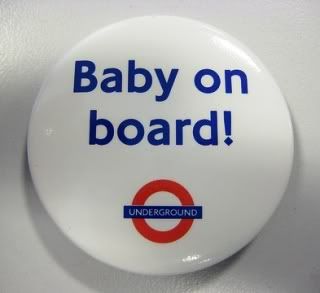
It's not that I have any great desire to fool people into thinking I'm pregnant. It's just that
"I'm really, really tired, you guys. So tired my hand is shaking as I grip the slippery pole, my knees are knocking, I can feel my legs actually buckling in the middle and sinking towards the floor. No one really knows what's wrong with me, so we're currently going with 'probably Chronic Fatigue Syndrome'; the heart condition thing seems to be sorted out but I do still occasionally faint while standing up for long periods in overheated conditions - hey! Like this one! - and I really don't want to pass out on your knee. That would just be weird when I come round and my nose is in your crotch and you're keeping your eyes determinedly on your Evening Standard. (True story!) So be a pal and GIMME YOUR MOTHERFUCKING SEAT, OKAY?"...would require a really big badge.
Sunday, 24 March 2013
The Snooty Myth: who gets to talk about sex work?
It's amazing how quickly your mind can be changed. How you can go from harbouring the grossest, most deeply-bedded prejudices to suddenly finding those prejudices ridiculous.
 So I've just finished Prostitutes: Our Life, edited by Claude Jaget. It tells the story of the Lyons sex worker community, which, in 1975, went on strike. In response to a rash of murders of prostitutes in that city - and police indifference to these crimes - a group of sex workers occupied a church, hanging a banner outside reading "Our children don't want their mothers in jail". (An aside: gotta love the French.) The movement spread, with churches being taken over across the country, until they were forced out and arrested; it was a massively significant moment in terms of bringing the needs and experiences of sex workers to the attention of mainstream society, and forging links between sex workers and the wider feminist- and labour-movements.
After relating these events, the book gives six of the women involved in the occupation free rein to talk about their lives. How they got into prostitution, how they feel about it, how it affects their relationships with romantic partners, with children, with other women... The stories vary wildly, giving a wonderfully detailed picture of how six specific women experience working in the sex industry. Noting the similarities between their depositions is particularly illuminating: police harassment and brutality is a common thread running through the book, and the call for decriminalisation (as opposed to legalisation in state brothels) never wavers.
I fucking love books like this: fiercely political, but a politics born of direct experience; a group of people determined to fix the problems in their own lives within the wider context of oppression.
Flipping from this to the sex work chapter in Kat Banyard's The Equality Illusion was, ah, illuminating.
Well, I tell a lie - the 68% PTSD claim has a footnote. Which links to Melissa Farley's infamous "Bad for the body, bad for the heart" study. Hey, I wonder what actual sex workers have to say about this research?
 The whole chapter goes on like this: scantily-referenced, reliant on dodgy research, coming from the unstated assumption that Sex Work Is Bad For Women without explaining exactly why this is. More than anything else, it's just boring: why do I care what Banyard's opinions on sex work are? Given her complete lack of experience in the field, wouldn't it make more sense to ask some current sex workers for their feelings on the matter? (Something that Banyard herself doesn't manage: the only people quoted in the chapter are former sex workers whose experiences in the industry were extremely negative.) Why not read Tits and Sass, or A Glasgow Sex Worker, or the book mentioned above, or literally anything which is informed by actual lived experience and not distorted by preconceived prejudices?
In fact, I enjoyed Prostitutes: Our Life so much that if you want it (and you trust me not to stalk you, which I won't! but I am a stranger on the internet so you're allowed to worry), I'll post it right to your door. First come, first served. You're also welcome to The Equality Illusion, if you want a laugh.

After relating these events, the book gives six of the women involved in the occupation free rein to talk about their lives. How they got into prostitution, how they feel about it, how it affects their relationships with romantic partners, with children, with other women... The stories vary wildly, giving a wonderfully detailed picture of how six specific women experience working in the sex industry. Noting the similarities between their depositions is particularly illuminating: police harassment and brutality is a common thread running through the book, and the call for decriminalisation (as opposed to legalisation in state brothels) never wavers.
I fucking love books like this: fiercely political, but a politics born of direct experience; a group of people determined to fix the problems in their own lives within the wider context of oppression.
Flipping from this to the sex work chapter in Kat Banyard's The Equality Illusion was, ah, illuminating.
What if the industry's credentials were fake - and its apparent embodiment of liberation just a carefully crafted illusion? What if 68 per cent of the women in prostitution have post-traumatic stress disorder as a direct result of the work they do? What if 88 per cent of the pornographic scenes men were masturbating to contained physically aggressive acts - nearly all directed at women - such as slapping, gagging, and choking, and if it had reliably been shown that consuming such images led to an increase in sexually aggressive attitudes and behaviours? What if the sex industry didn't represent sexual liberation at all but, instead, one of the most profound challenges to women's status as equal citizens in the world today?What if you could have offered one single footnote to back up any of those claims?
Well, I tell a lie - the 68% PTSD claim has a footnote. Which links to Melissa Farley's infamous "Bad for the body, bad for the heart" study. Hey, I wonder what actual sex workers have to say about this research?
"It’s common knowledge ’round these parts, and in every sex worker activist circle I’ve ever bumped up against, that the work Melissa Farley does is misleading, ill-intentioned, and downright vile in the way it determinedly misrepresents the whole truth. She’s a self professed “abolitionist,” meaning she wants sex work (and by necessary extension, sex workers) to be eradicated, and everything she’s ever done in this arena has been deliberately intended to further her point of view." Tits and Sass

In fact, I enjoyed Prostitutes: Our Life so much that if you want it (and you trust me not to stalk you, which I won't! but I am a stranger on the internet so you're allowed to worry), I'll post it right to your door. First come, first served. You're also welcome to The Equality Illusion, if you want a laugh.
Non-social-justice interlude: sock talk
I made a sock!

I mean: it is far from being the perfect sock. The yarn is scratchy, and I don't like multicoloured yarn, and I'm pretty sure my feet don't end in a central point, and I unravelled the whole thing immediately after taking this picture - but I am still more pleased with this little beast than with anything else I've ever knitted.
It's just such a miracle! For pretty much everything else, you knit rectangles, or tubes, and stick them together to more-or-less successfully cover your body. But socks! You start with a tube, you go off in a different direction, you pick up stitches, you start a new tube in a different direction... and, magically, you end up with something that is the actual shape of a foot!
Truly, a triumph of ancient engineering.

I mean: it is far from being the perfect sock. The yarn is scratchy, and I don't like multicoloured yarn, and I'm pretty sure my feet don't end in a central point, and I unravelled the whole thing immediately after taking this picture - but I am still more pleased with this little beast than with anything else I've ever knitted.
It's just such a miracle! For pretty much everything else, you knit rectangles, or tubes, and stick them together to more-or-less successfully cover your body. But socks! You start with a tube, you go off in a different direction, you pick up stitches, you start a new tube in a different direction... and, magically, you end up with something that is the actual shape of a foot!
Truly, a triumph of ancient engineering.
Subscribe to:
Posts (Atom)